


Rovea Baby Sleep System
Rovea Baby Sleep System
Fewer Nighttime Wakeups
Gentle, Responsive Approach
Clear Step-By-Step Plan
Couldn't load pickup availability


Rated 4.9/5 based on 2,000+ reviews
-

Bedtime Finally Feels Manageable
I was overwhelmed by all the conflicting advice online, but this guide gave me one clear plan to follow. Within the first week, bedtime felt calmer and I finally understood what to adjust when naps did not go as planned.
-

Exactly What I Needed
This was so much easier to follow than piecing together tips from different apps and parenting groups. The schedules and troubleshooting sections helped us create a routine that actually felt realistic for our baby.
-

We’re All Sleeping Better
I loved that the approach felt gentle while still giving us clear steps and boundaries. Our baby gradually started settling more easily, and I feel much more confident handling nighttime wakeups now.


Stop Guessing, Start Building Better Sleep
You bought the sleep sack. You installed the blackout shades. You downloaded the app that promised to find the "sweet spot." You've rocked, shushed, bounced, and attempted the crib transfer so many times you could do it in your sleep — if you were getting any. And you're still awake at 3:14 AM, doing the math on how many hours you have left before work.

Here's what nobody told you: those methods didn't fail because your baby is broken or because you didn't try hard enough. They failed because they treated sleep as a behavior problem instead of a biological one.
The Baby Sleep Guide is a step-by-step protocol built on two mechanisms — Sleep Association Weaning and Wake Window Optimization — that address why your baby wakes between cycles in the first place. It's not another list of tips. It's the decision tree for what to do when the tips stop working.
A Better Night Starts With A Better Plan

What Makes Rovea Special
| Rovea | Others | |
|---|---|---|
| A complete step-by-step system | ||
| Responsive, gradual strategies | ||
| Age-aware sleep guidance | ||
| Clear troubleshooting support | ||
| Designed for real family life |
FAQ's
Is this just cry it out with a new name?
Is this just cry it out with a new name?
No. Extinction methods fail most parents because they're attempted on an overtired baby whose system is flooded with cortisol — self-soothing is chemically difficult in that state. This protocol gets the timing right first, then fades your support gradually. You stay in the room. You stay responsive.
I've tried everything. Why would this work?
I've tried everything. Why would this work?
Because "everything" was probably ten different methods for one day each, which teaches your baby that the rules change if they hold out. Consistency is the active ingredient, and consistency requires a plan you can actually follow at 3 AM.
My baby is different — high needs, spirited, hates the crib.
My baby is different — high needs, spirited, hates the crib.
Temperament varies. Sleep physiology doesn't. What looks like a personality trait is almost always an association: your baby learned that sleep requires motion, or the breast, or your arms. Associations can be changed.
Will this damage our bond?
Will this damage our bond?
Sleep is a developmental need, like nutrition. A chronically overtired baby is a stressed baby — and a chronically sleep-deprived parent is a less patient, less present one. Teaching independent sleep is something you give your child, not something you take away.
How long until we see results?
How long until we see results?
Every baby and family is different. Some parents may notice small improvements within several days, while others may need more time to establish consistency. Progress may include calmer settling, fewer interventions, longer stretches of sleep, or more predictable naps rather than an immediate perfect night.
What exactly is included?
What exactly is included?
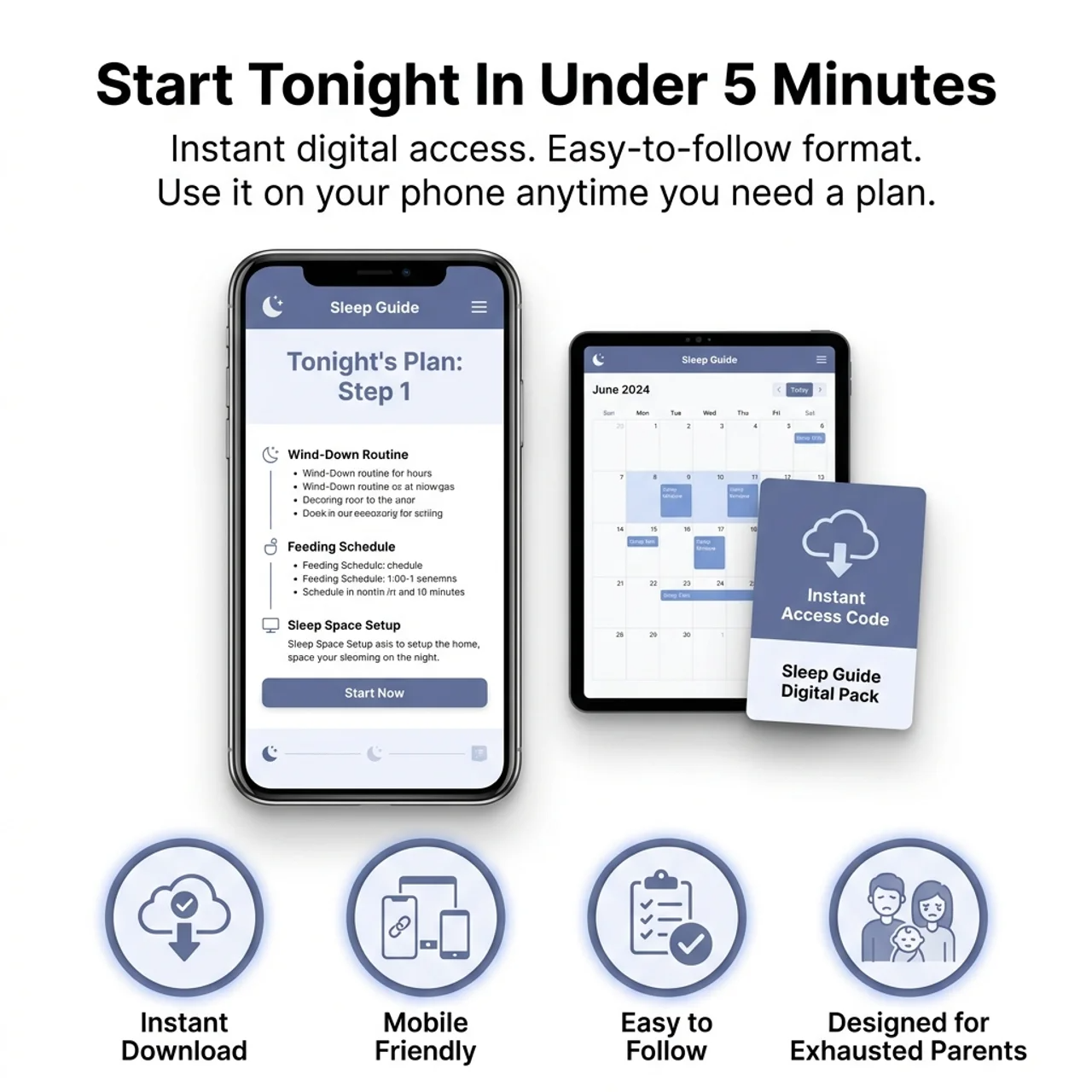
The Baby Sleep Guide is a digital, step-by-step resource covering foundational baby sleep concepts, age-appropriate routines, wake-window guidance, sleep associations, responsive settling strategies, and troubleshooting for common setbacks such as short naps, frequent night waking, difficult crib transfers, and bedtime resistance.